Helping women shape their own lives
Meera Sansthan began with drought relief in Western Rajasthan in 1976. Today, we help girls return to school, women find counselling and legal support, and artisans earn from their skills.
Read our story
From drought relief to everyday support
A beginning in 1976
Meera Sansthan is a registered non-profit society headquartered in Jodhpur. Founded in 1976 during severe drought relief, the organisation works with rural women, children, and families across Western Rajasthan.
The work is guided by Gandhian values: dignity, self-reliance, non-violence, and community participation. Meera Sansthan believes that people can change unfair conditions when they have knowledge, legal awareness, and collective support.
Working with life in the Thar
In remote desert villages, drought, distance, poverty, and social customs often make daily life harder for women and girls. When rainfall fails, families struggle for food, fodder, and safe drinking water.
Meera Sansthan began with the grassroots vision of social worker Mrs. Chhagan Behan Golechha, the first Mahila Sarpanch of Rajasthan. Since then, the organisation has supported education, health, legal awareness, and livelihoods through community-led action.
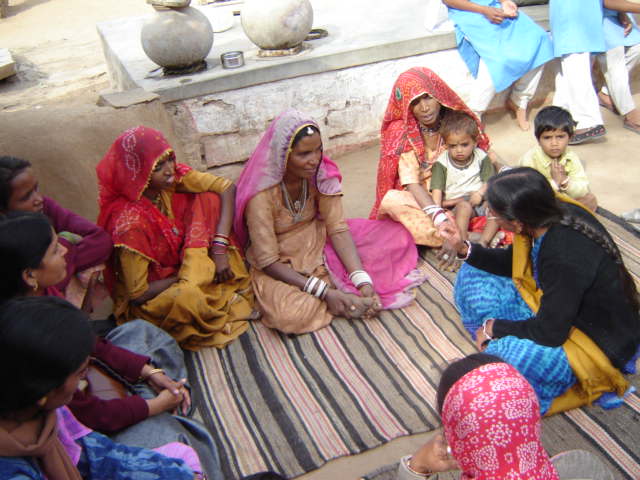
Grassroots courtyard dialogue in a remote village of Western Rajasthan.
Why the Name Meera?
Her own thoughts. Her own choices.
Our organisation takes its name from Meera Bai, the celebrated poet-saint of Rajasthan. Her life reminds us of courage, voice, devotion, and the right to choose one's own path.
In the Thar desert, where many women have been expected to stay silent, Meera's story continues to stand for self-worth and independent thought.
What A Meera Means to Us
To Meera Sansthan, a Meera is every rural girl and woman who refuses to let society define her limits. She has dreams, voice, choices, and the right to shape her own future.
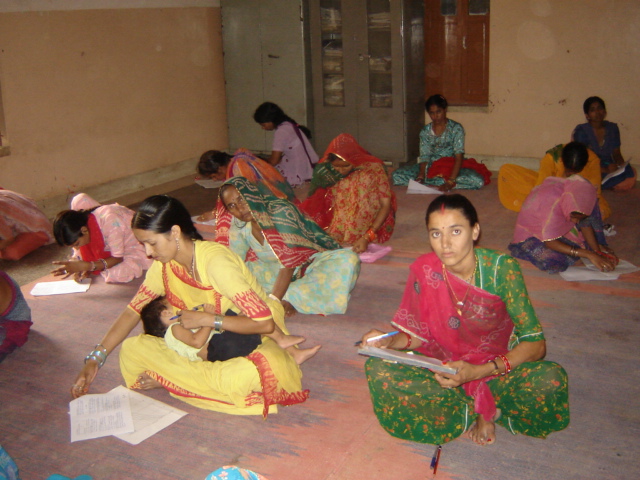
A mother takes part in a learning session with her child in her lap.
A way of working. A reason to stay.
The programmes have changed over five decades. The commitments behind them remain: listen to people, respect their choices, and build the knowledge and support they can use in their own lives.
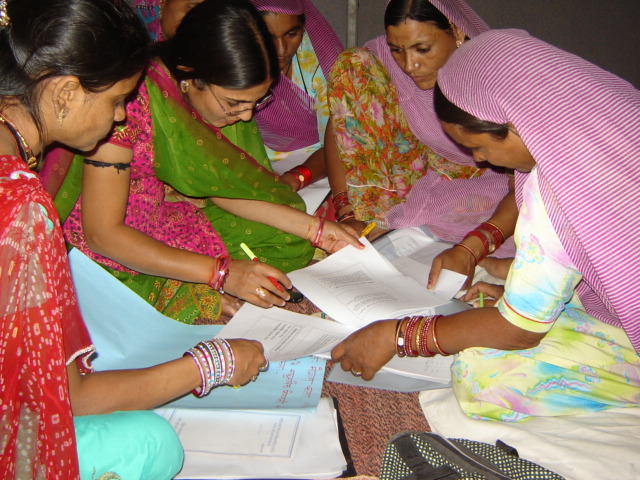
Listen before acting
Understanding a village starts with the people who live there. Community conversations and local assessment help shape programmes around the needs people identify.
In practiceCourtyard meetings and community mapping inform education, health and access to services.
Follow the community workMake room for her choices
Girls and women have their own thoughts, aspirations and decisions to make. Education and support should give them more room to shape their lives.
In practiceCommunity education and residential learning camps help girls reconnect with formal schooling.
Explore girls' educationPut knowledge within reach
A right is easier to use when someone can explain the options. Training and counselling connect people with practical knowledge and available services.
In practiceWomen's protection centres combine counselling, legal guidance, crisis support and referrals.
Explore women's supportBuild on local skill
Self-reliance starts with what people already know. Artisan programmes support traditional skills with training, tools, organisation and market access.
In practiceLeather cluster work includes design development, access to credit and participation in fairs and exhibitions.
Explore artisan livelihoodsOur Core Aims & Work Areas
Our work follows clear objectives: protect children, support women, improve health and education, and build self-reliant livelihoods.
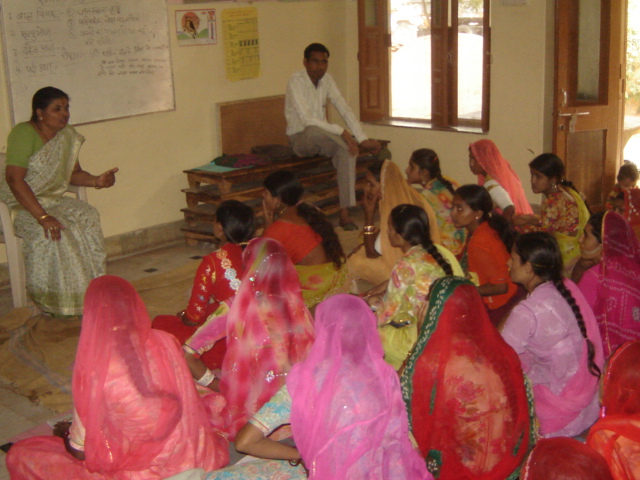
Child Rights & Girl Child Protection
Helping children stay safe from child labour, abuse, and early marriage through local vigilance and support.
- End child labour, domestic bondage, and atrocities against minors.
- Reduce gender bias between boys and girls.
- Build child-friendly community reporting networks.
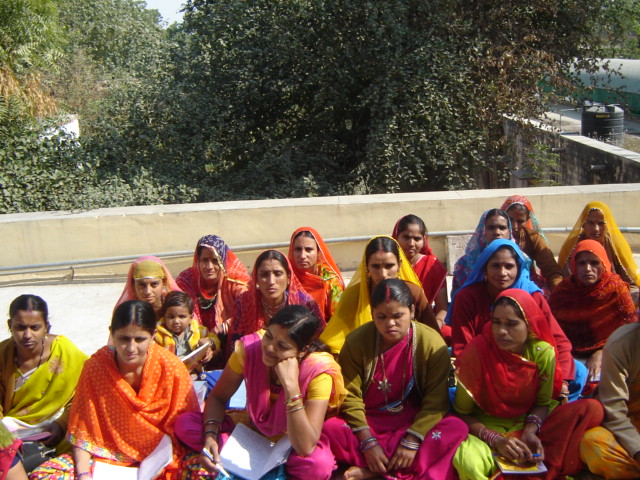
Formal Education & Dropout Mainstreaming
Supporting children, especially girls, to return to school and continue learning with confidence.
- Re-enroll dropout and left-out adolescent girls.
- Provide residential support, tutoring, and remedial learning.
- Train teachers and anganwadi workers in child-centred education.
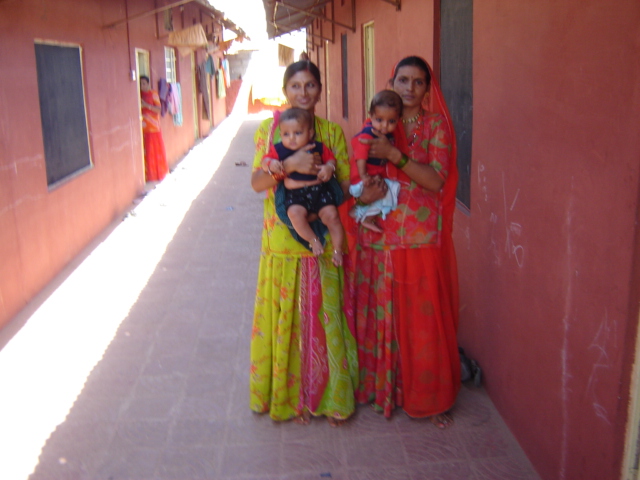
Maternal & Child Health and Nutrition
Improving everyday health habits, nutrition, and preventive care for mothers and children in remote villages.
- Improve nutrition and health for children in remote dhanis.
- Educate families on iodized salt, immunization, and childcare.
- Train parents and caregivers to create nurturing homes.
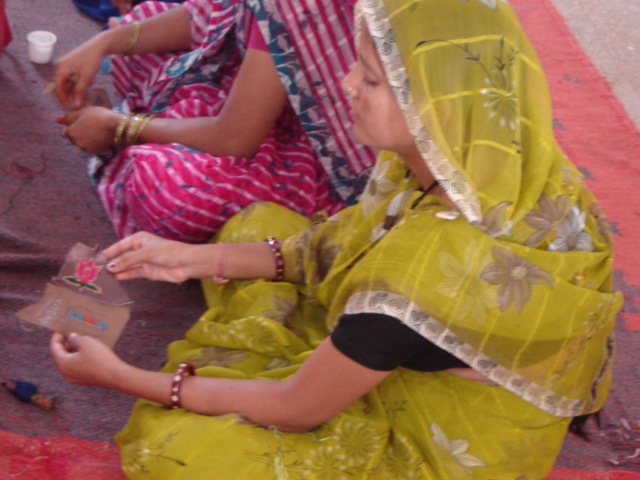
Artisan Livelihood & Gandhian Philosophy
Strengthening local livelihoods through women-led groups, craft skills, and fair market access.
- Improve family income through artisan training and market links.
- Organize rural women into Self-Help Groups and cooperatives.
- Promote non-violence, truth, harmony, and self-reliance.
The 8 Official Constitutional Objectives
How the Work Happens
Meera Sansthan works through local groups, awareness sessions, training, legal support, and partnerships.
Forming Peoples Collectives
Organizing the unorganized and forming peoples institutions, organizations, and non-formal groups with marginalized people, mostly women and vulnerable men.
Awareness & Info Dissemination
Awareness meetings and camps on social issues and government welfare schemes to strengthen community collectives.
Legal Aid & Services
Legal education and services provided against atrocities, domestic violence, dowry, and any form of harassment to women.
Capacity Building
Training of community members, leaders, government employees along with exposure visits and workshops.
Advocacy & Lobbying
Trying to bring about pro-poor policies and structural changes for equitable entitlements.
Networking
Working in close coordination with like-minded organizations to form a collective force for alleviation of poverty and injustices.
Explore More About Meera Sansthan
Meet the people, values, partners, and milestones behind Meera Sansthan.
Mission & Vision →
Read the simple commitments that guide Meera Sansthan across women support, education, health, and livelihoods.
Key Milestones →
Follow the organisation's timeline from 1976 drought relief to current field programmes.
Leadership & Founders →
Meet Founder Mrs. Chhagan Behan Golechha, Patron and Director Asha Bothra, and the field teams behind Meera Sansthan's work.
Governance & Compliance →
Review Meera Sansthan registration details, 12A/80G status, FCRA approval, and NGO Darpan listing.
Partners →
See the institutions and community partners who have supported programme work over the years.
Be a Part of Western Rajasthan's Transformation
Volunteer, partner, or support the work. Every form of involvement helps the field teams keep going.